
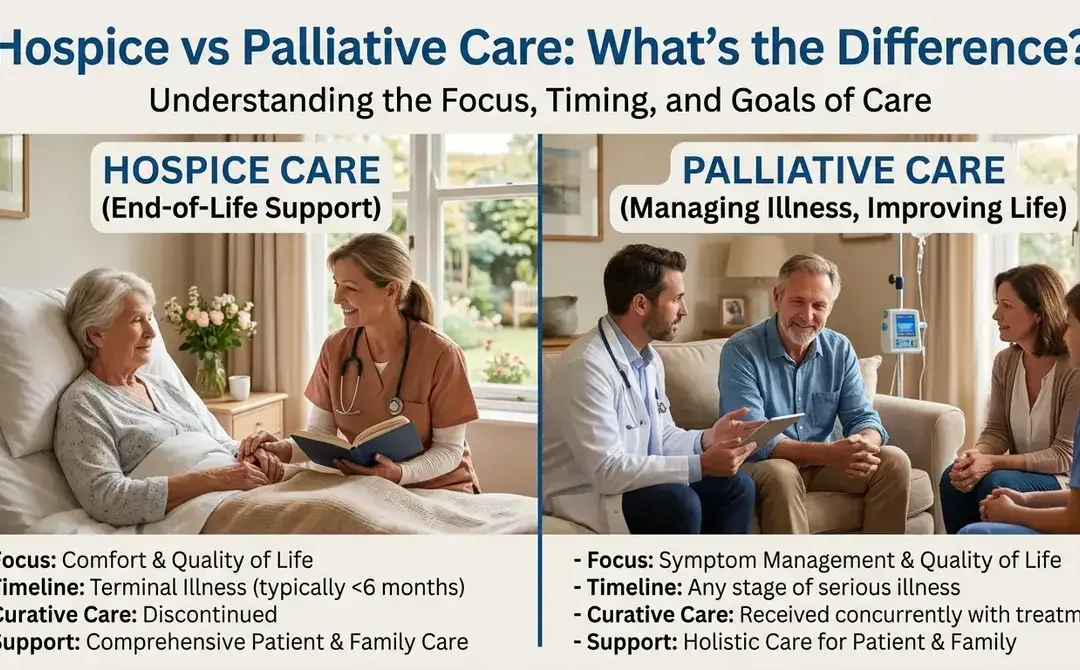
Understanding Two Types of Compassionate Care
When facing a serious illness, families are often introduced to terms like hospice care and palliative care. While both focus on comfort and quality of life, they are not the same—and understanding the difference can help families make more informed decisions.
Both approaches share a common goal:
to provide relief, dignity, and support during difficult medical journeys.
But when and how they are used can differ significantly.
What Is Palliative Care?
Palliative care is specialized medical care designed to improve the quality of life for people living with serious illnesses.
Unlike hospice care, palliative care:
- Can begin at any stage of illness
- Can be provided alongside curative treatments
- Focuses on relief from symptoms, pain, and stress
Patients receiving treatments such as chemotherapy, surgery, or other medical interventions can also receive palliative care to help manage side effects and improve comfort.
What Is Hospice Care?
Hospice care, on the other hand, is intended for patients who are nearing the end of life.
It typically begins when:
- Curative treatments are no longer effective or desired
- A doctor estimates a life expectancy of about six months or less
At this stage, the focus shifts entirely to:
- Comfort and pain management
- Emotional and spiritual support
- Helping patients live as fully as possible in their remaining time
If you’d like a deeper understanding of hospice care, you can read our complete guide:
👉 What Is Hospice Care? A Complete Guide for Patients and Families
Key Differences Between Hospice and Palliative Care
Here are the most important distinctions:
1. Timing of Care
- Palliative Care: Any stage of illness
- Hospice Care: End-of-life stage
2. Treatment Goals
- Palliative Care: Comfort + ongoing treatment
- Hospice Care: Comfort only (no curative treatment)
3. Eligibility
- Palliative Care: No life expectancy requirement
- Hospice Care: Typically 6 months or less
4. Location of Care
Both can be provided in:
- Hospitals
- Nursing homes
- At home
What Do Hospice and Palliative Care Have in Common?
Despite their differences, both types of care share several important similarities:
- Focus on quality of life
- Provide pain and symptom management
- Offer emotional and psychological support
- Support not just patients, but also families and caregivers
- Use a team-based approach, including doctors, nurses, and counselors
At their core, both are about treating the person—not just the illness.
When Should You Choose Palliative Care?
Palliative care is a good option if:
- You or a loved one has been diagnosed with a serious illness
- You are still pursuing treatment
- You want help managing pain, stress, or side effects
It can begin early and continue throughout the course of illness.
When Is Hospice Care the Right Choice?
Hospice care may be appropriate when:
- Treatments are no longer working
- The focus shifts from curing to comfort
- Quality of life becomes the top priority
For many families, hospice care brings a sense of peace, allowing them to focus on meaningful time together.
Making the Right Decision for Your Family
Choosing between hospice and palliative care is deeply personal. There is no one-size-fits-all answer.
The best approach is to:
- Speak openly with your healthcare provider
- Ask questions about goals, expectations, and options
- Consider what matters most to the patient and family
Understanding these two types of care can help you make decisions with confidence and clarity.
Compassion, No Matter the Path
Whether through palliative care or hospice care, the goal remains the same:
to ensure that no one faces serious illness alone.
Both paths offer comfort, dignity, and support—helping patients and families navigate difficult moments with care and compassion.